A VISUAL JOURNEY / 01
How we learned
to see the universe.
Four images that changed the size of our world.
Begin with the evidenceTHE QUESTION
How did the visible universe grow?
The universe did not change when we built a better telescope. What we could know about it did. At each stop, study the image before opening the explanation. Ask what the image shows and what it cannot show on its own.
Trace how better observations and ways to measure distance changed what people could know about the universe. Explain what each image shows and how it was made.
OBSERVATION 01 / 04
The Moon has a landscape
A familiar light in the sky became a place with mountains and hollows.
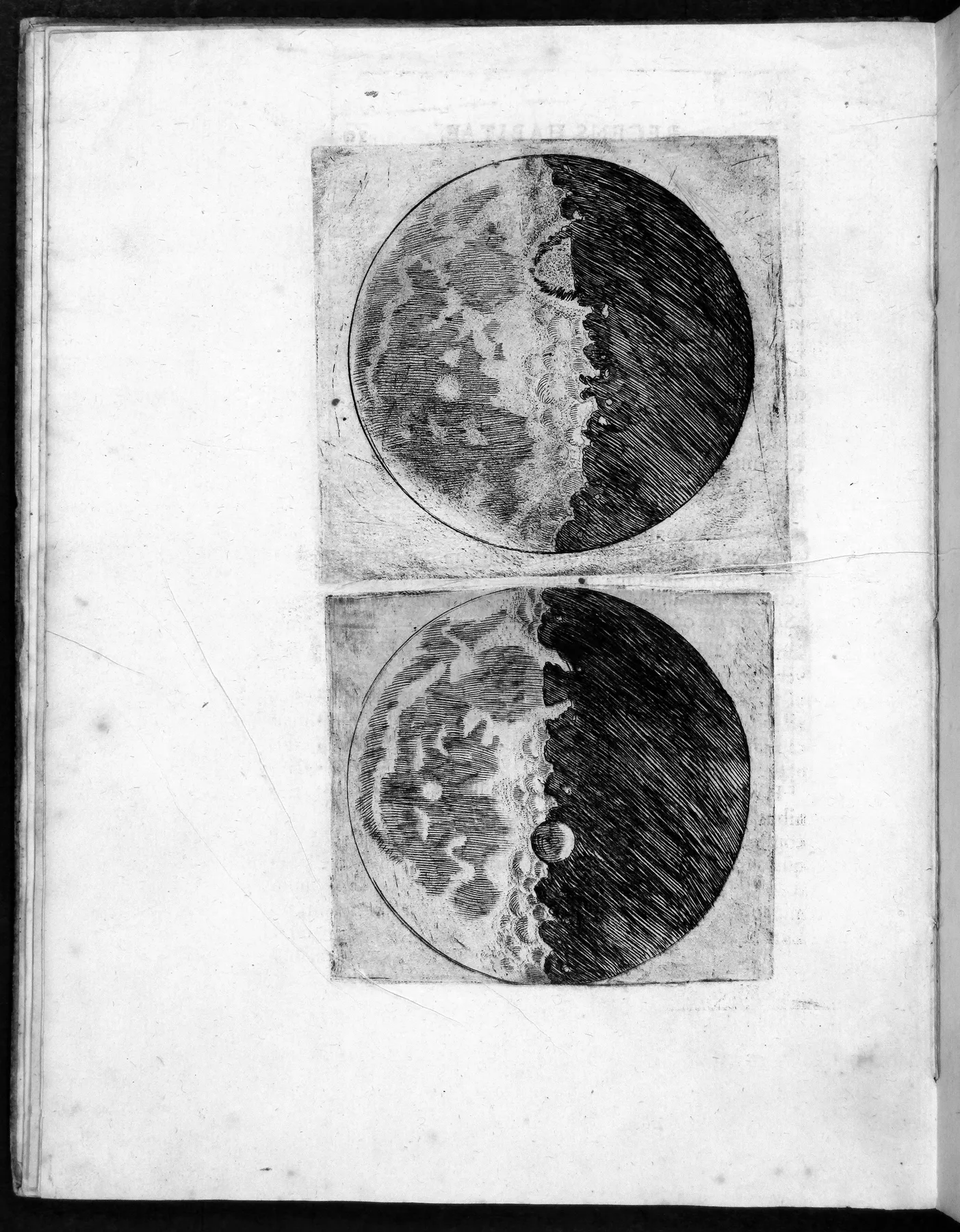 Historical drawing
Follow the uneven boundary between the bright and dark parts of Galileo's Moon.
Take a moment with the image before reading on.
Reveal the interpretation
Galileo aimed a telescope at the Moon and drew what he saw. Shadows and bright peaks showed that its surface was rough, not a perfectly smooth sphere.
Galileo Galilei
OBSERVATION 02 / 04
A galaxy beyond our own
One changing star helped measure a distance that seemed impossible.
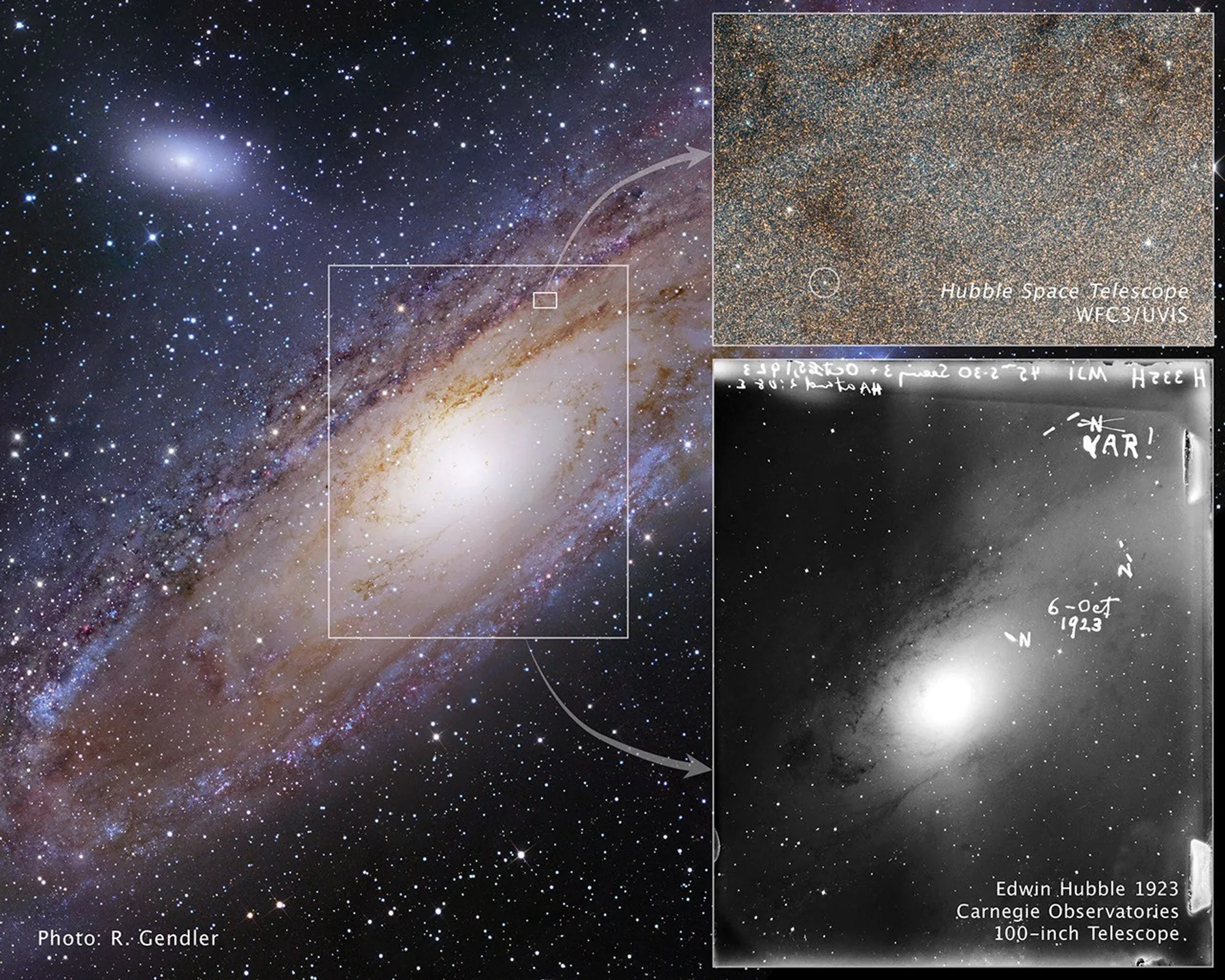 Historical and modern image composite
Find Hubble's handwritten "VAR!" beside a star on the 1923 plate at lower right.
Take a moment with the image before reading on.
Reveal the interpretation
Henrietta Swan Leavitt found a link between a Cepheid star's pulse and its true brightness. Edwin Hubble identified such a star in Andromeda; that method placed Andromeda far beyond the Milky Way.
Henrietta Swan Leavitt · Edwin Hubble
OBSERVATION 03 / 04
An empty patch fills with galaxies
Hubble stared at a tiny, seemingly dark part of the sky for ten days.
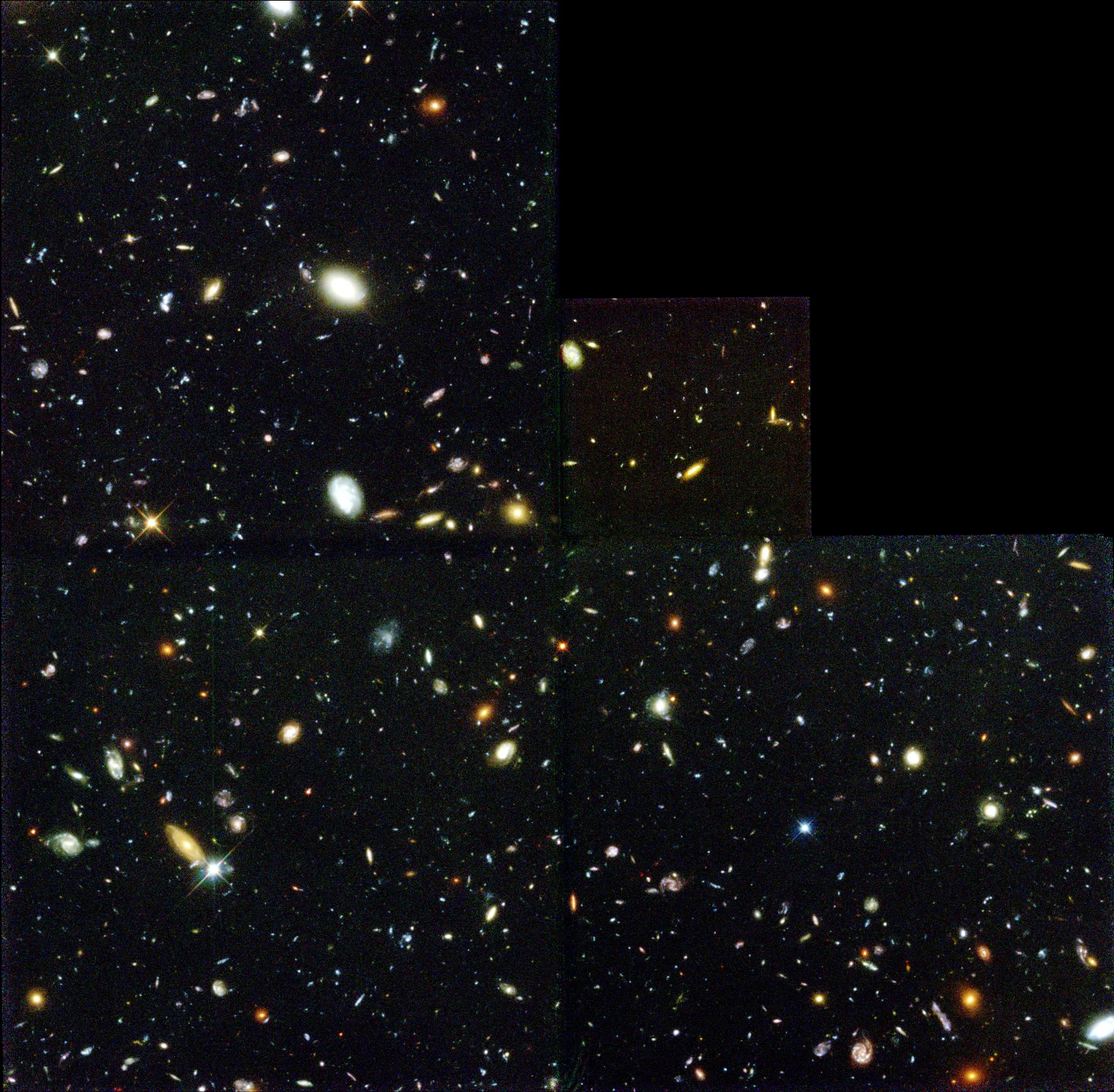 Processed telescope image
Pick out several shapes and colors. Most of these small smudges are entire galaxies, not individual stars.
Take a moment with the image before reading on.
Reveal the interpretation
The Hubble team combined 342 exposures from December 1995. The long observation revealed thousands of galaxies in a patch of sky that had looked nearly empty.
Robert Williams · Hubble Deep Field Team
OBSERVATION 04 / 04
Gravity makes a cosmic lens
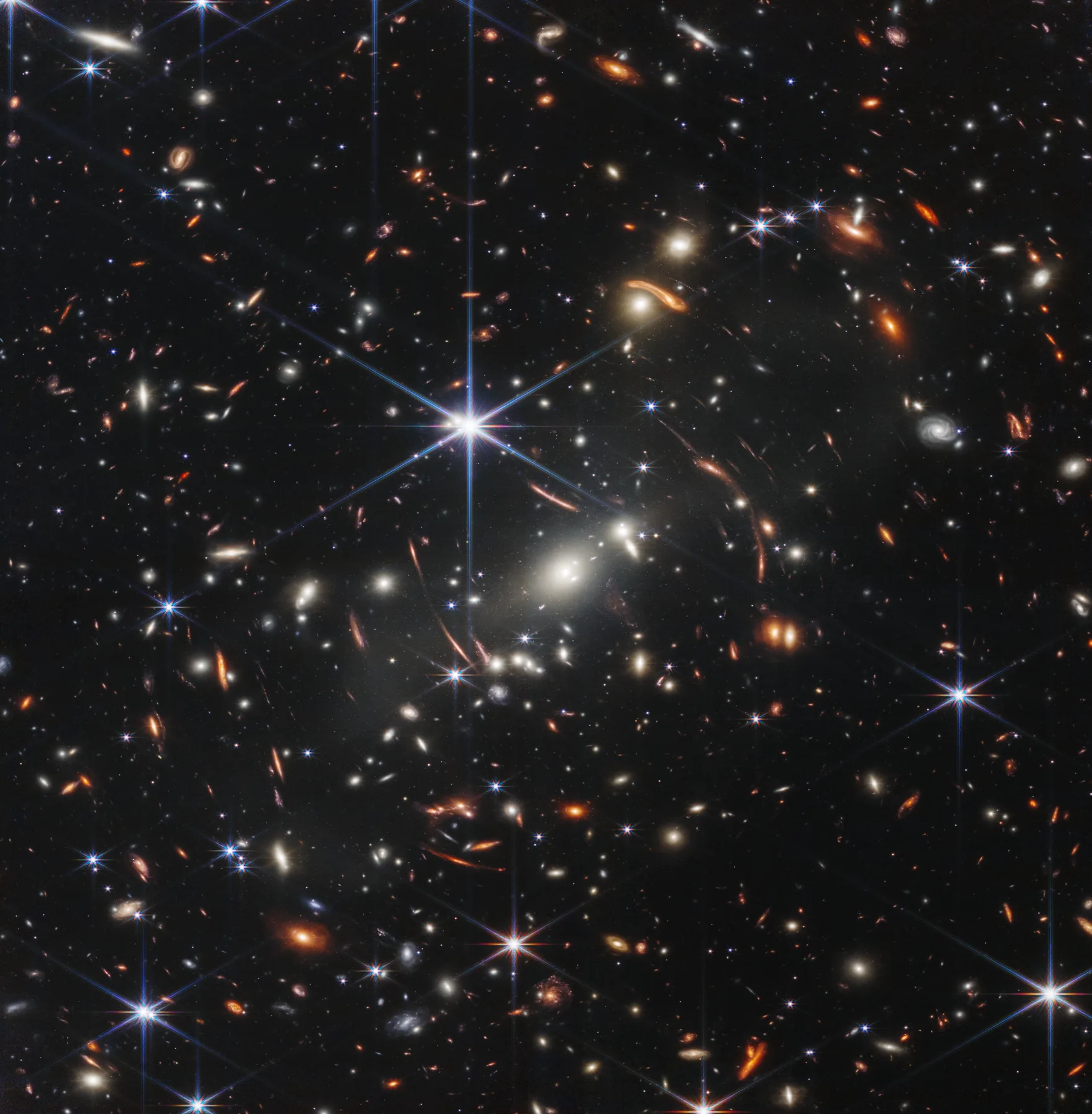
Webb saw distant galaxies through a foreground cluster's bending light.
Processed near-infrared imageFind the stretched arcs around the bright galaxies near the center. They are distorted views of galaxies farther away.
Take a moment with the image before reading on.
Reveal the interpretation
Webb recorded near-infrared light from galaxy cluster SMACS 0723. The cluster's gravity bent and magnified light from galaxies behind it, revealing details that would otherwise be harder to see.
James Webb Space Telescope science and engineering teams
TAKE IT INTO THE CLASSROOM
Look. Infer. Question.
Pause at each image before opening its interpretation. Ask students to separate what they can observe from what they infer. Then follow the linked sources to test their ideas.
- What detail do you notice first? What might you be missing?
- What did the instrument reveal that unaided eyes could not?
- What can this image support, and what needs other evidence?
Adapted from the Library of Congress approach to primary source analysis. See its teacher guides