✳ FROM THE EARLIEST LIGHT TO THIS VERY MOMENT
Everything,
in time.
An unbroken journey through the history of the universe. Follow the moments that made our world, from first light to right now.
Begin at the beginningYEARS TO EXPLORE
SCROLL TO TRAVEL THROUGH TIME
THE LONG ARC / VOL. 01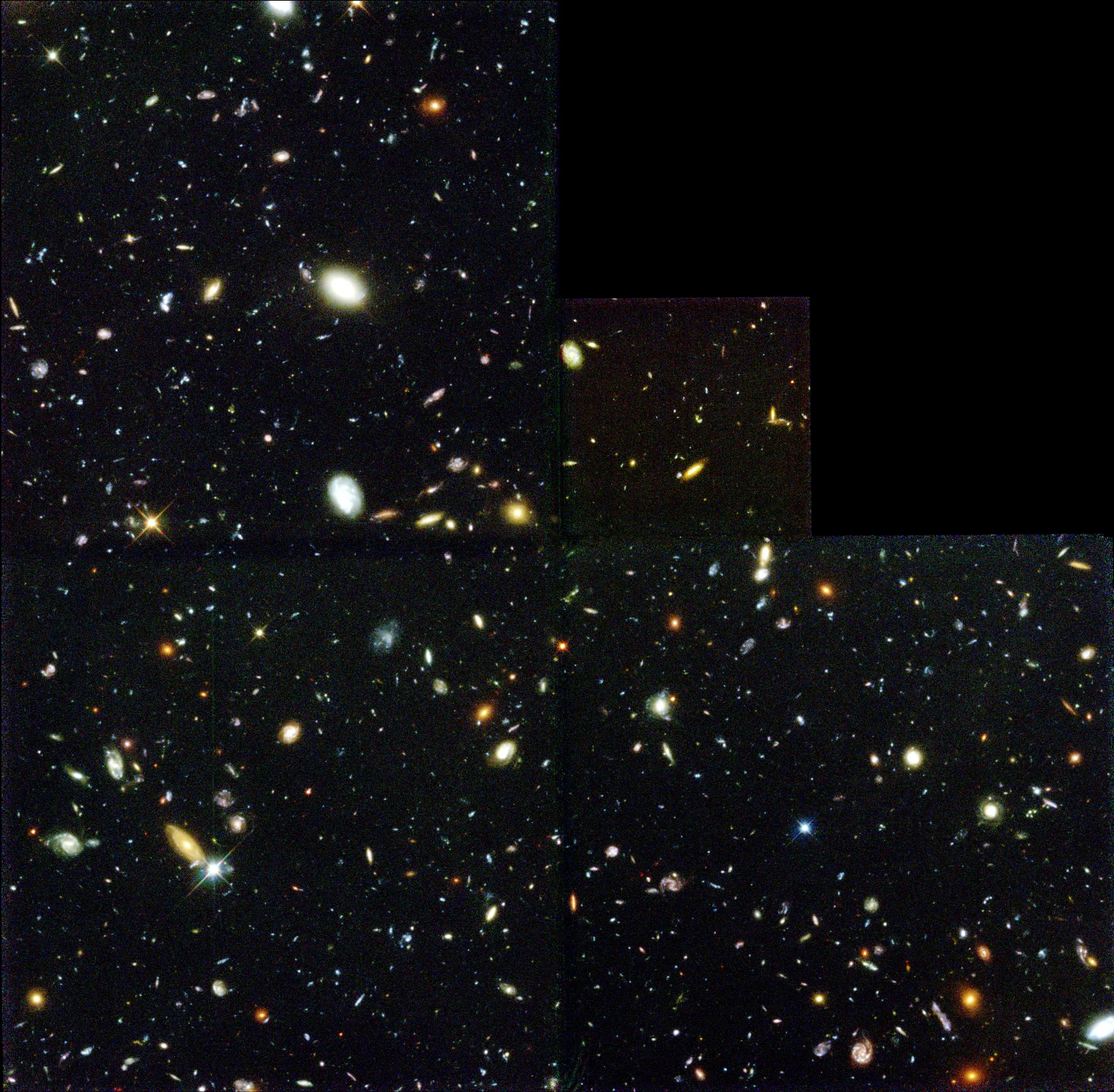
A NEW WAY TO EXPLORE / 01
What did we see when we looked closer?
Study four images. Make a claim about what you see. Then reveal the evidence that changed our view of the universe.
Explore the visual journeyA DIFFERENT KIND OF HISTORY THE CONTINUUM
Time does not
move evenly here.
Billions of years pass in a few gestures. As you approach the present, the view opens into centuries, then decades, then years.
01 / ∞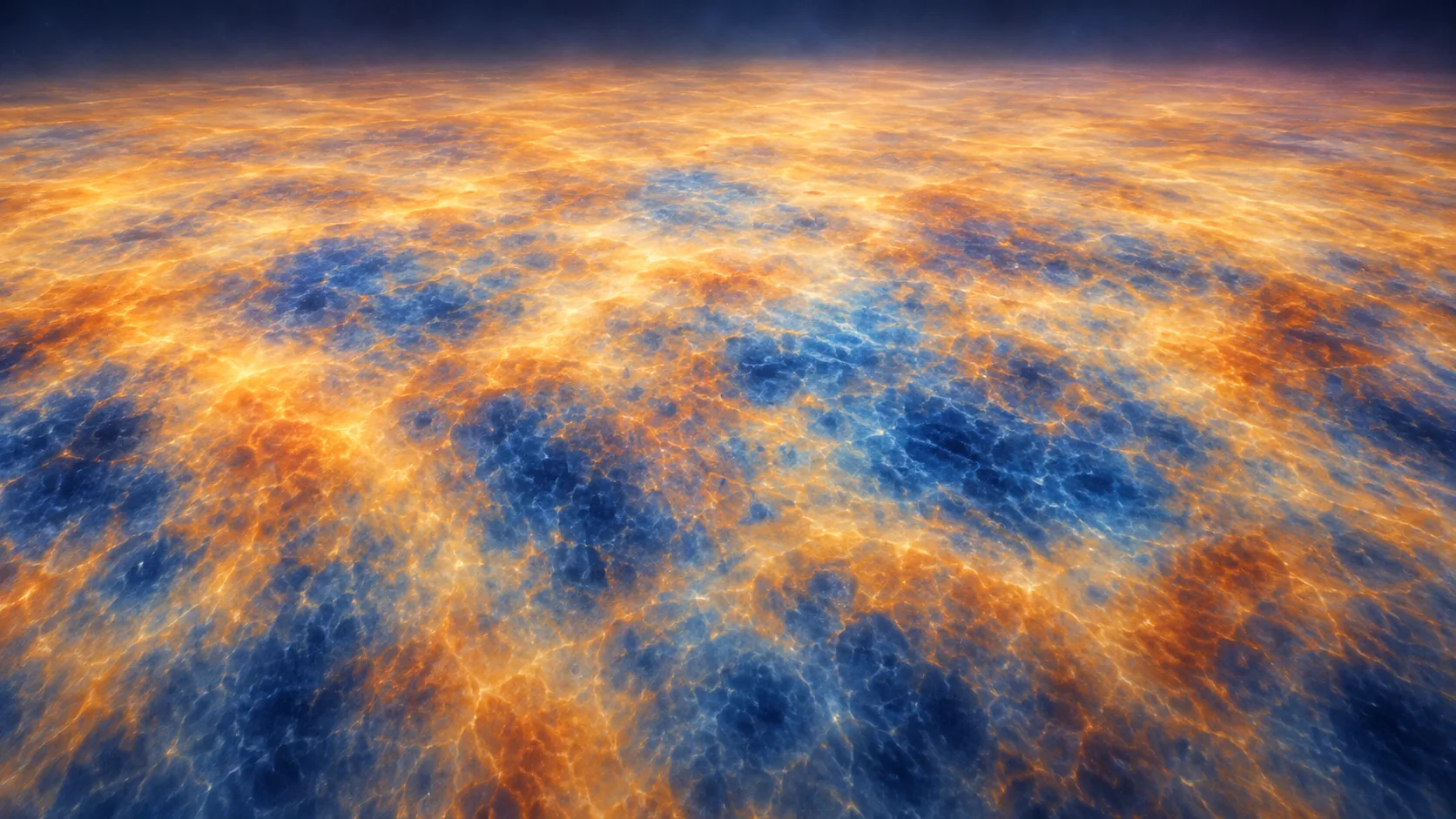
First light
Before there were stars, there was a beginning we are still learning to understand.
Where is the light brightest, and what does the darkness leave uncertain?
The oldest light we observe comes from a hot early universe. It does not show the instant of creation.
Check the evidence: NASA · The universe's history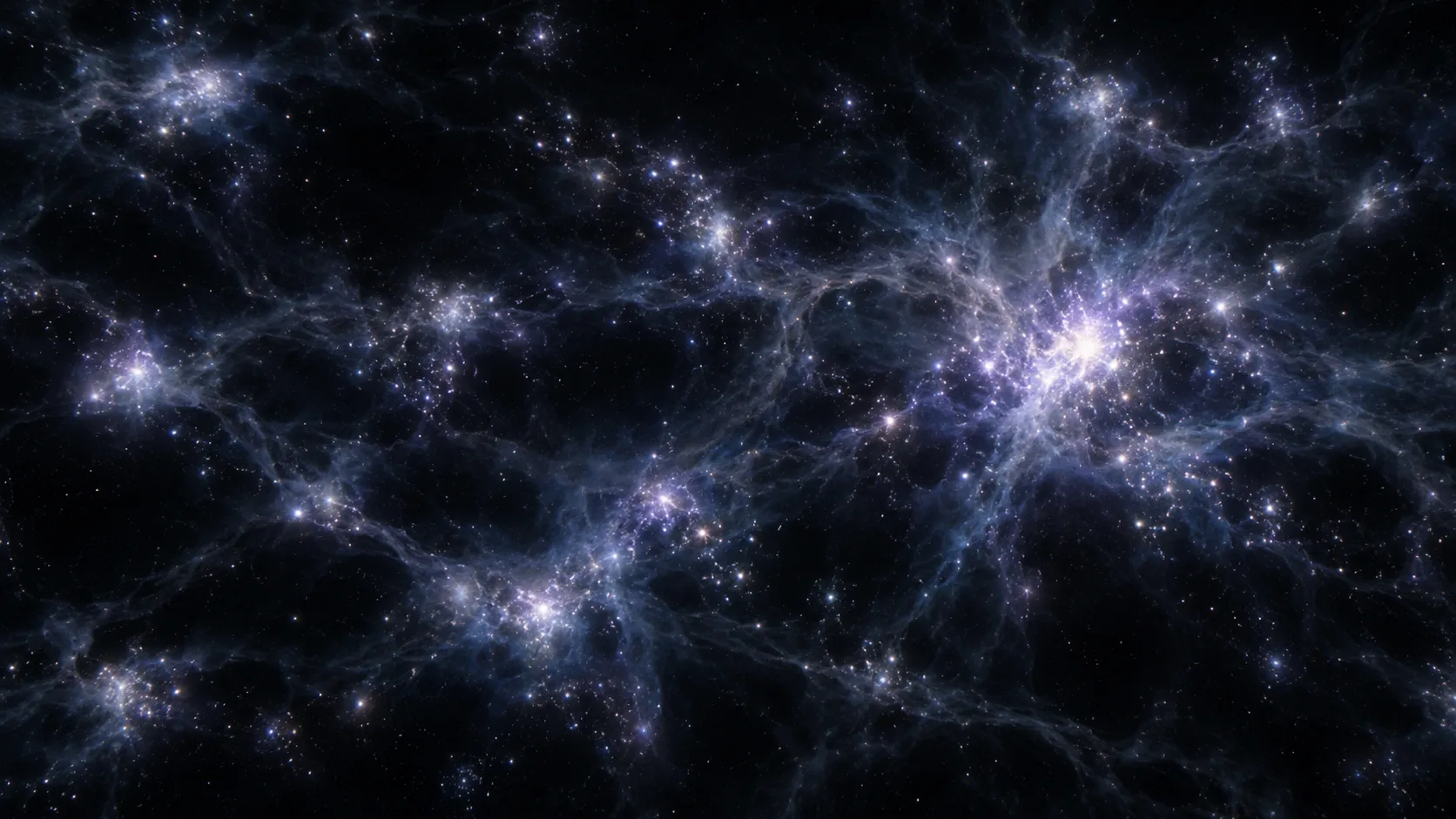
Stars & galaxies
Gravity gathered the first light into structure.
What has gathered into bright clusters, and what remains between them?
Gravity gathered gas into stars and galaxies over hundreds of millions of years.
Check the evidence: NASA · The universe's history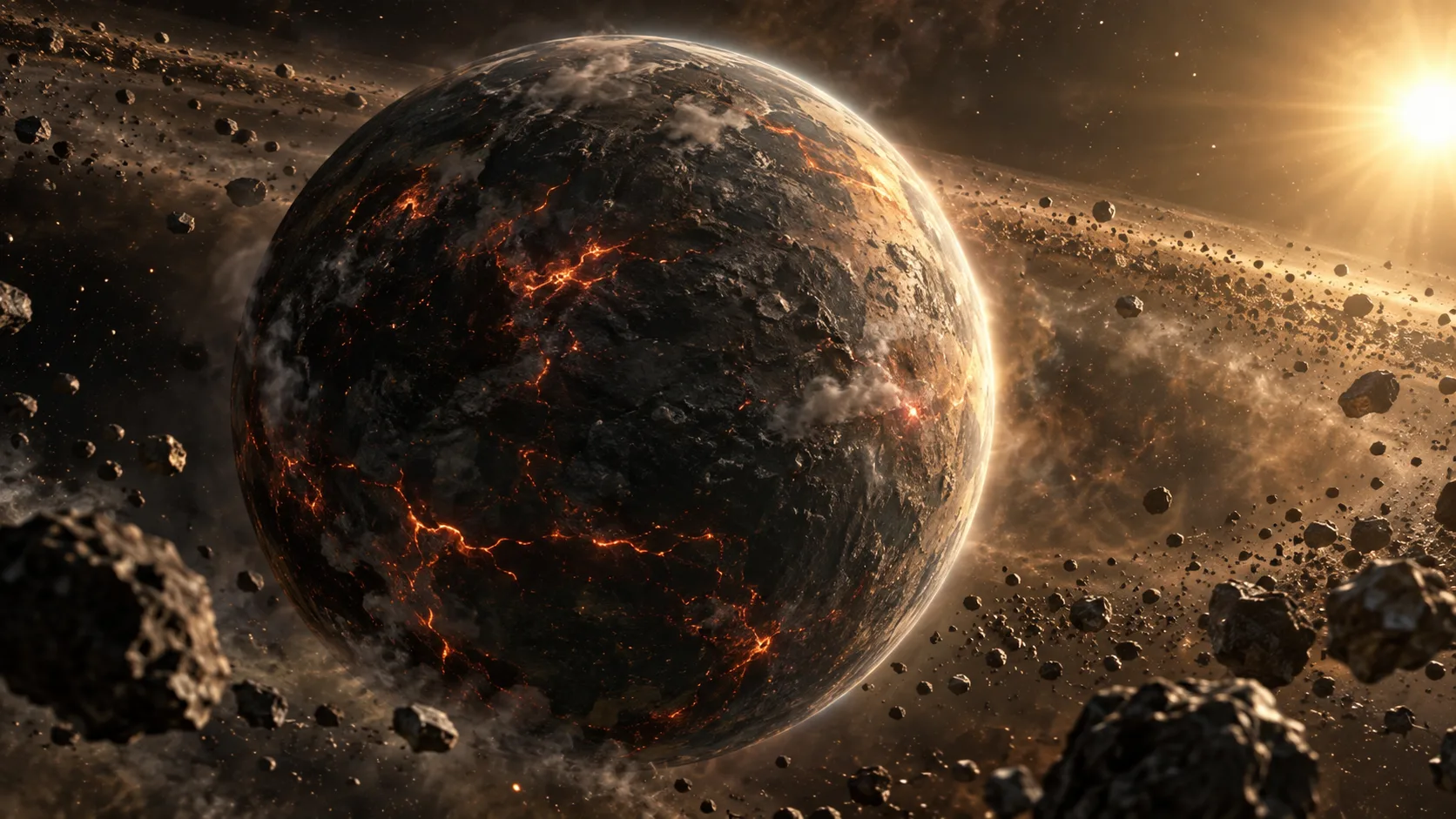
A world forms
One ordinary star acquired an extraordinary planet.
What clues suggest this planet is changing rather than finished?
Earth formed over time from Solar System material; ancient minerals suggest water may have appeared early.
Check the evidence: NASA · Ancient crystals suggest an early ocean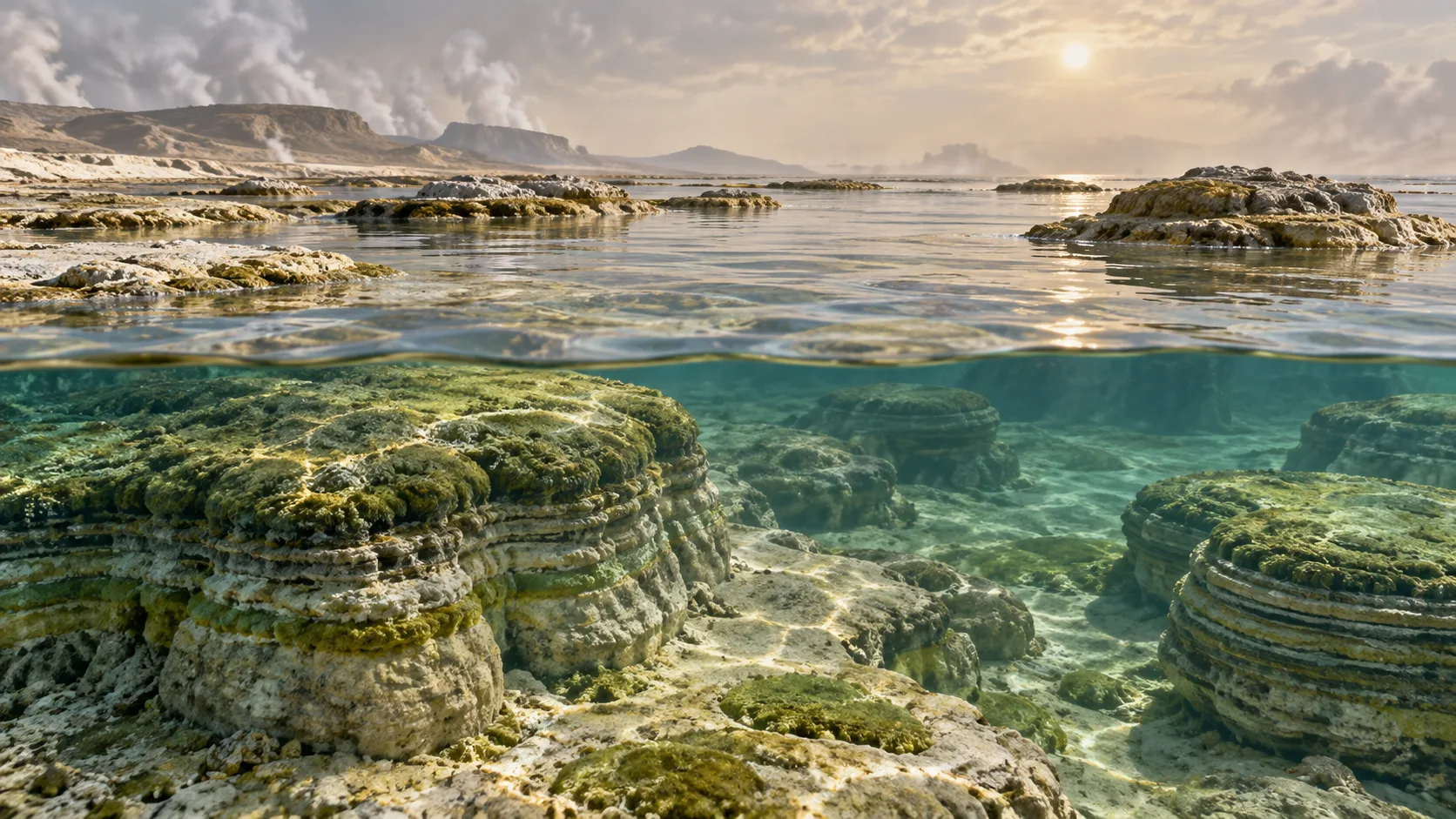
Life takes hold
The story moved from chemistry to inheritance, then to ecosystems.
Where can you find a thin layer of life in a world without large animals?
Microbial ecosystems existed by at least about 3.5 billion years ago; the earliest traces remain debated.
Check the evidence: Smithsonian · History of life on Earth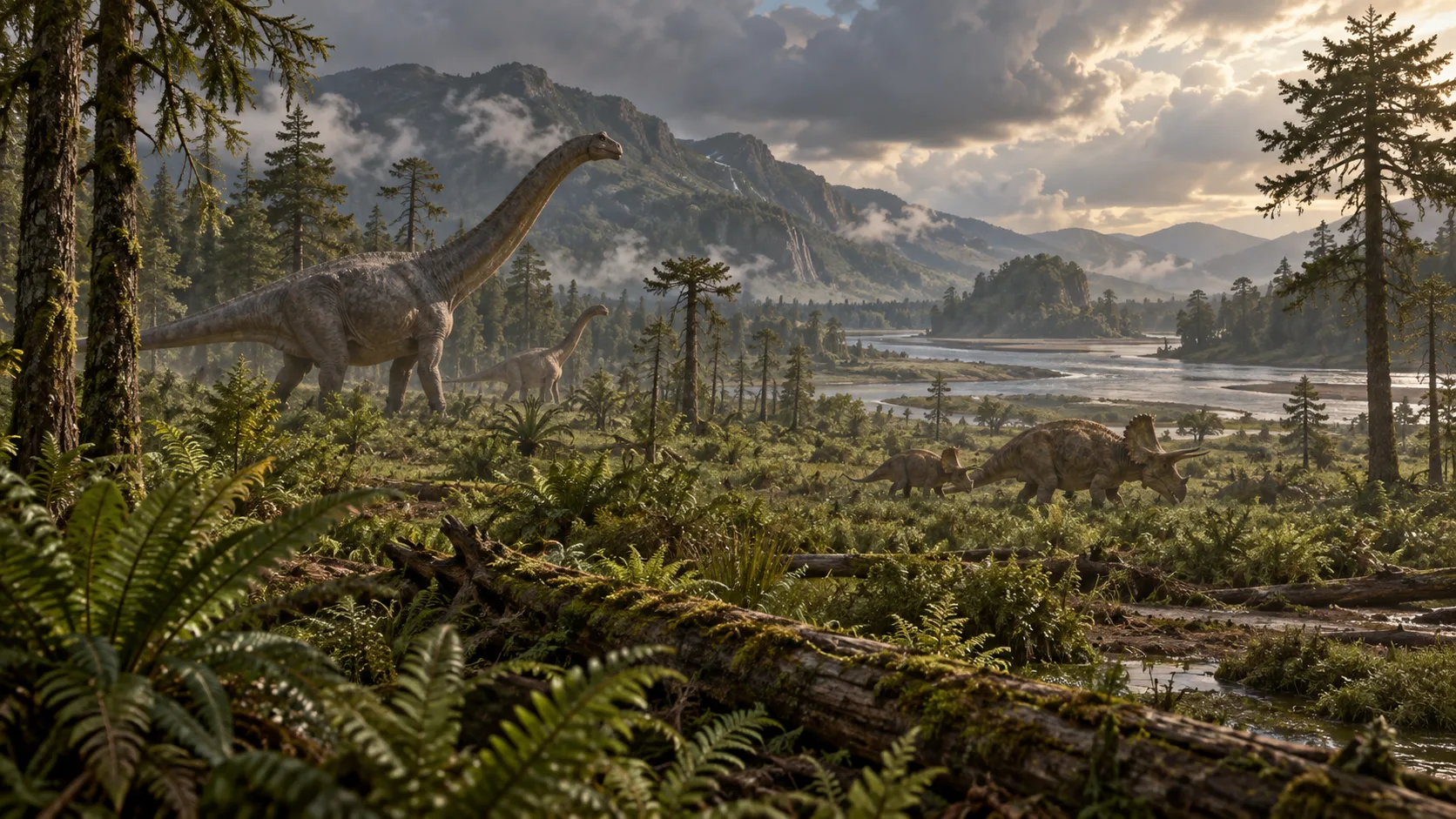
The age of animals
New bodies appeared. Entire worlds disappeared.
How many different body forms and habitats can you find?
Animal life diversified across deep time, while extinctions repeatedly reshaped ecosystems.
Check the evidence: Smithsonian · History of life on Earth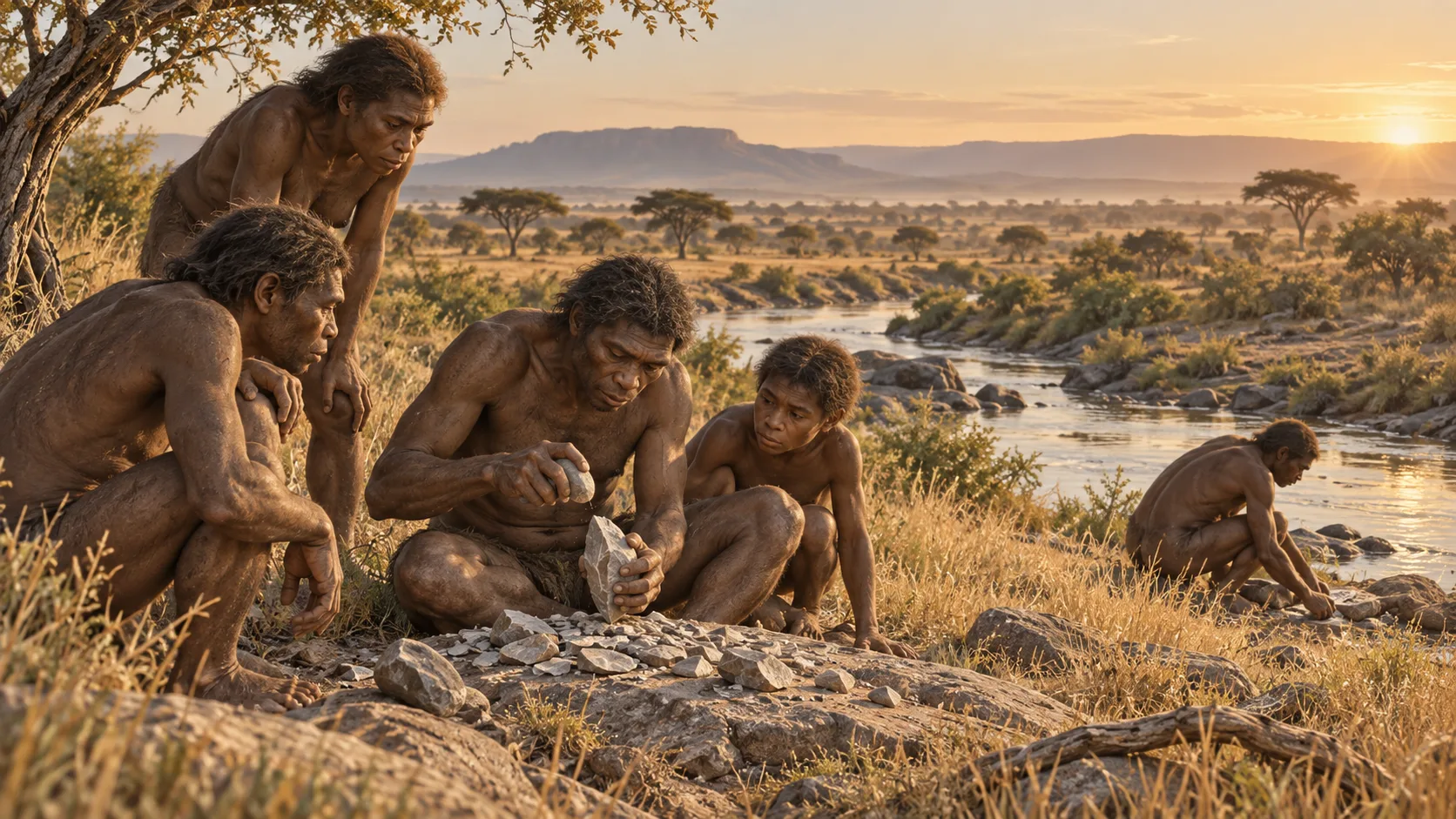
Becoming human
For almost all of our story, we lived without cities or writing.
What are the hands doing, and how might the stones change daily life?
Stone tools and cut marks on bones preserve evidence of how early humans worked and obtained food.
Check the evidence: Smithsonian · Tools and food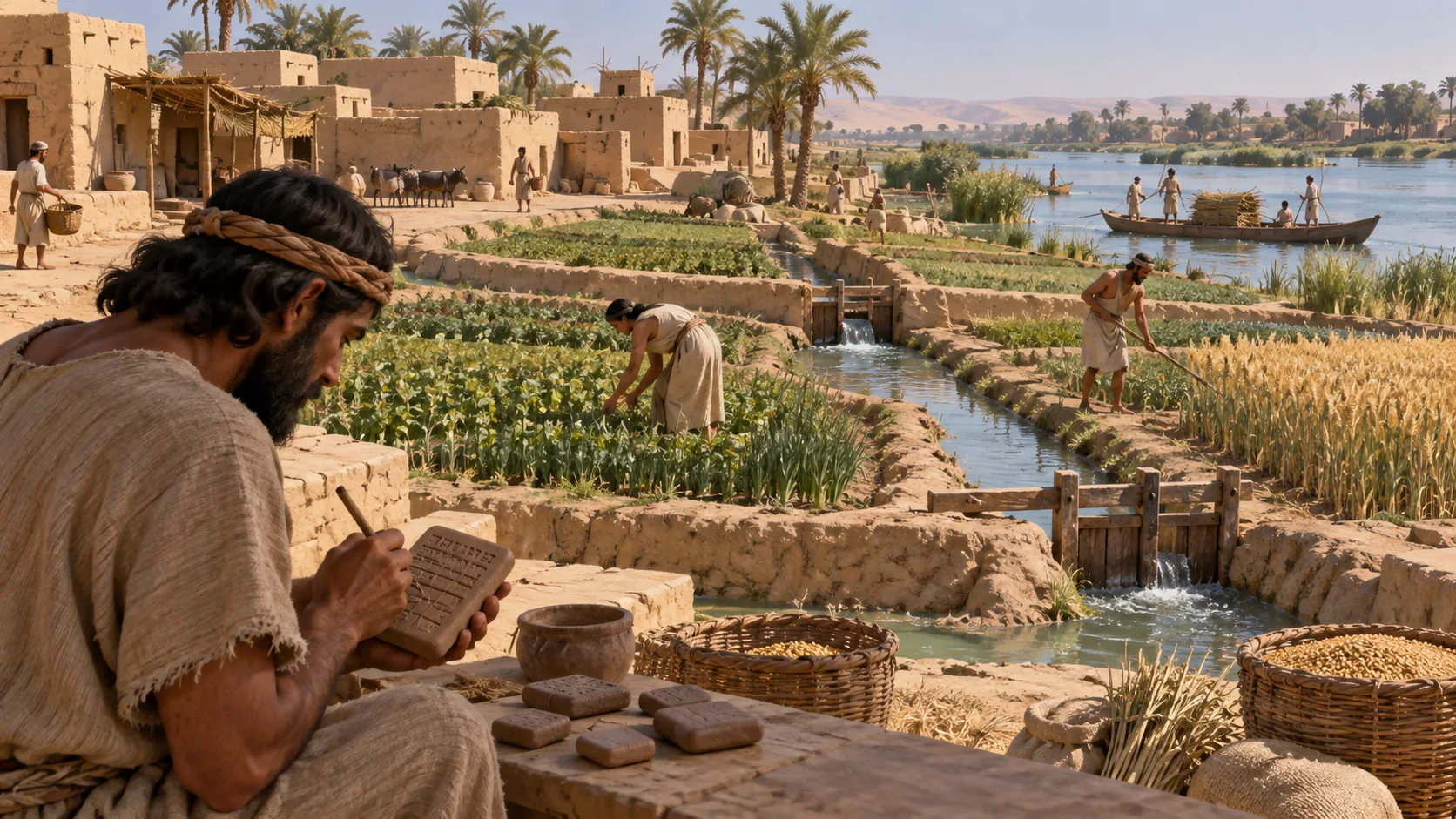
Made worlds
Farming, records, and institutions changed the speed of memory.
Where do you see shared work and a record being made?
Early cuneiform grew from accounting, letting records outlast the people who made them.
Check the evidence: British Museum · How to write cuneiform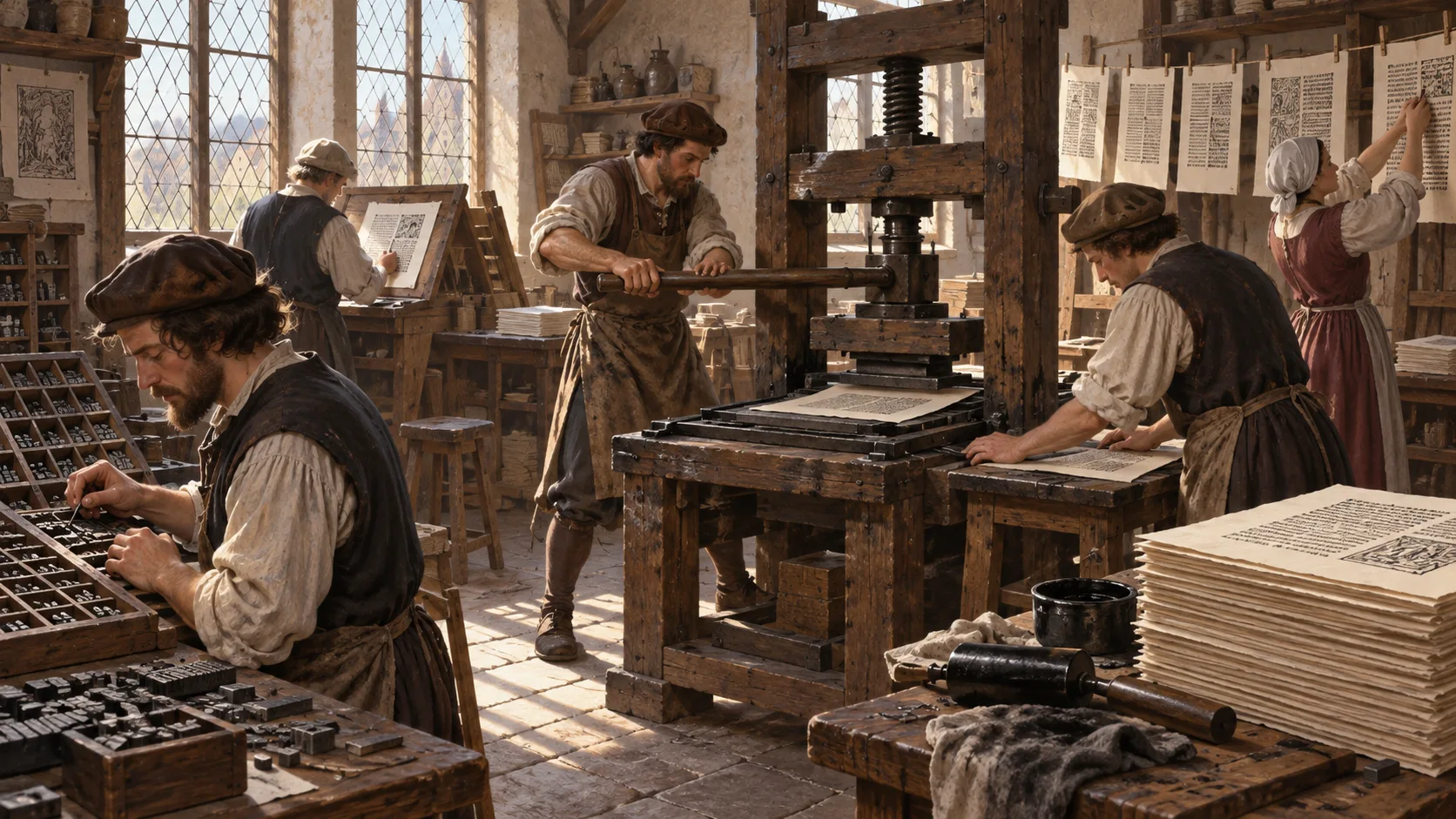
Ideas in motion
Knowledge began to travel farther than any one lifetime.
What is being repeated in the workshop, and who could receive it?
Gutenberg's system made reproducing books much faster in Europe during the mid-1400s.
Check the evidence: Library of Congress · The Gutenberg Bible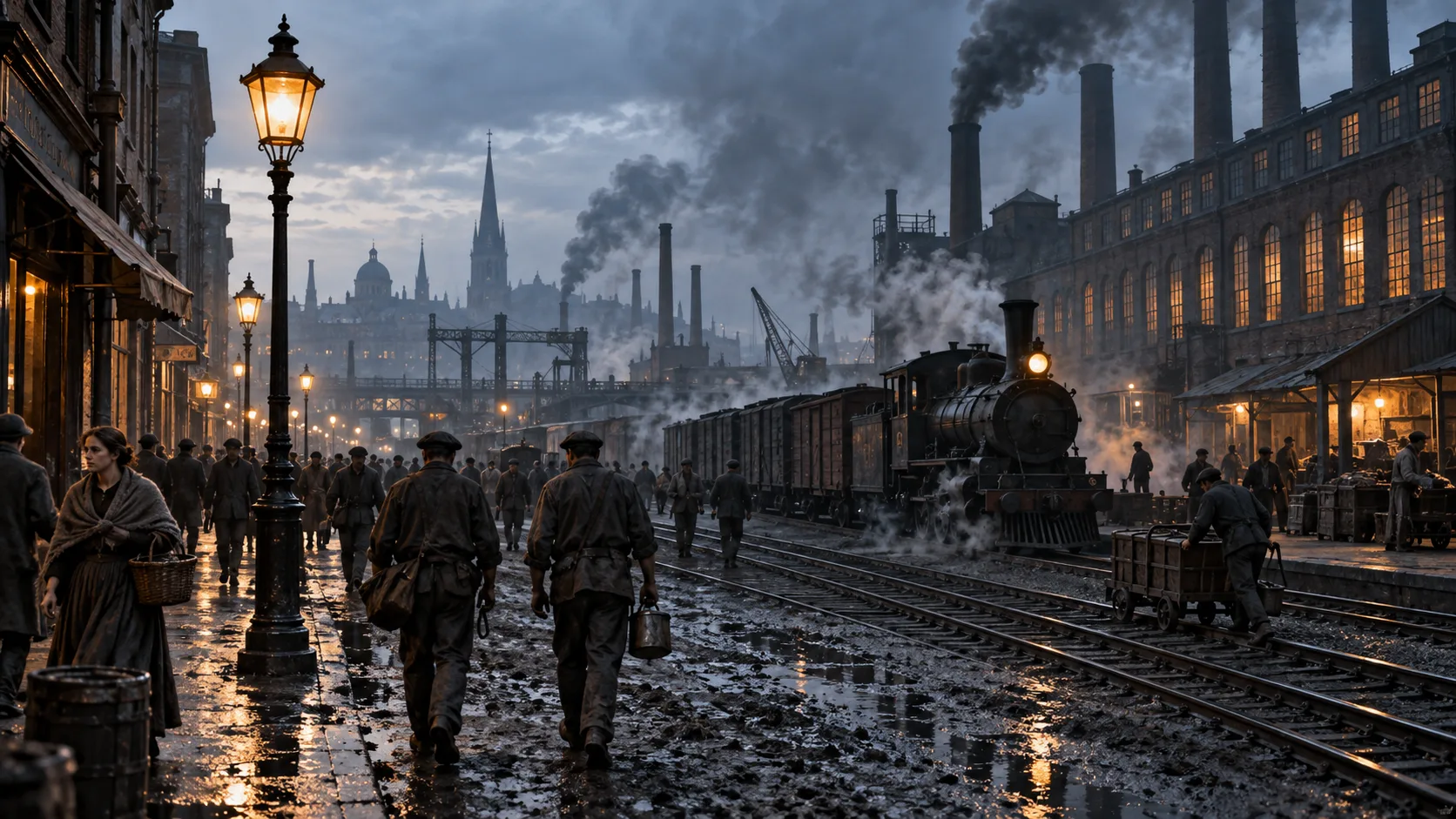
The accelerating world
Energy, machines, and medicine redrew the possible.
Who powers the machines, and where does their smoke go?
Steam and fossil energy transformed work and cities through a long, uneven transition.
Check the evidence: Science Museum · Steaming through the centuries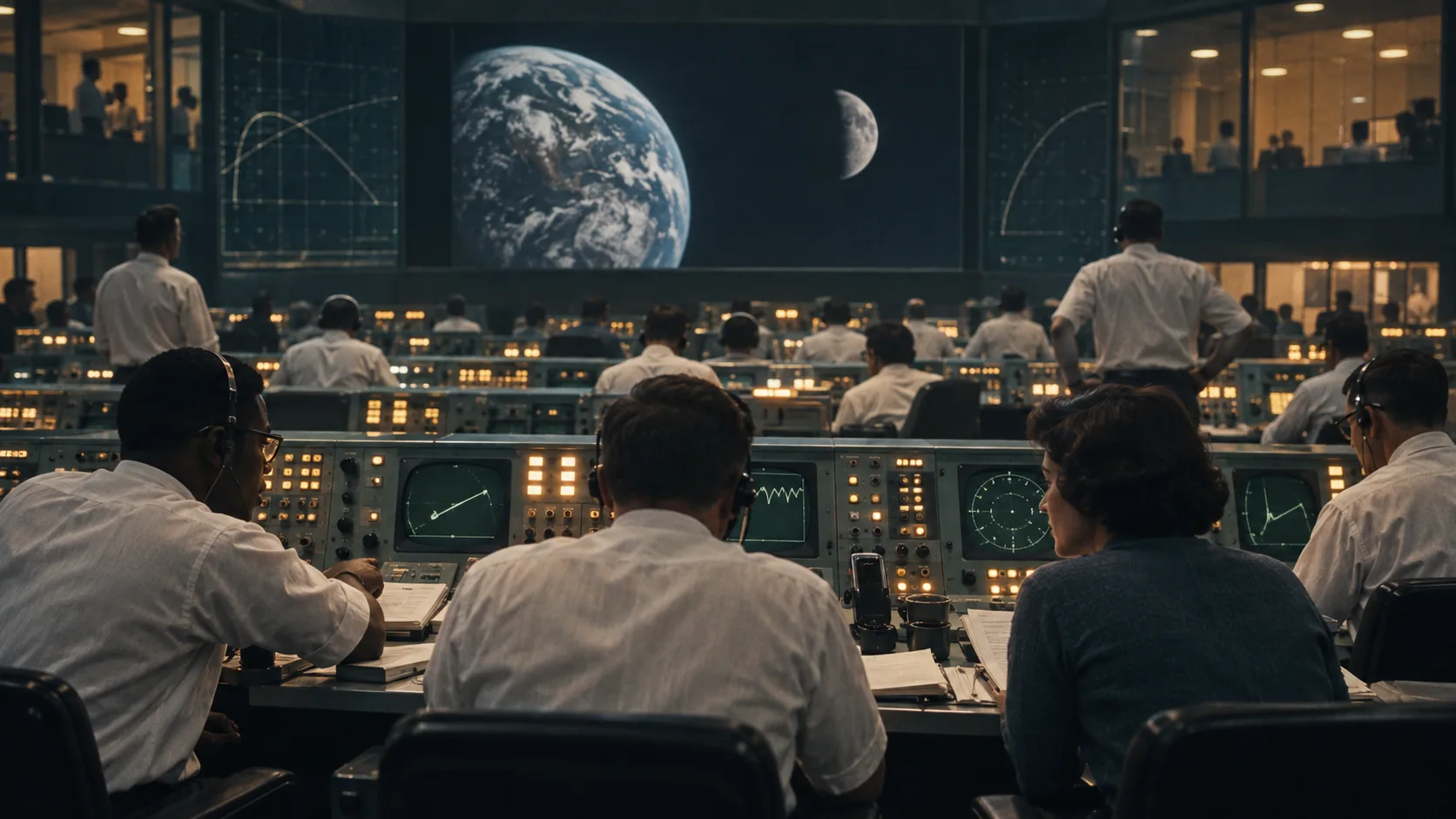
A connected planet
In a few generations, humanity reached the Moon and linked the world.
Which objects connect this room to places beyond it?
In 1969, Apollo 11 brought humans to the Moon after years of science, engineering, and collective work.
Check the evidence: NASA · Moon missions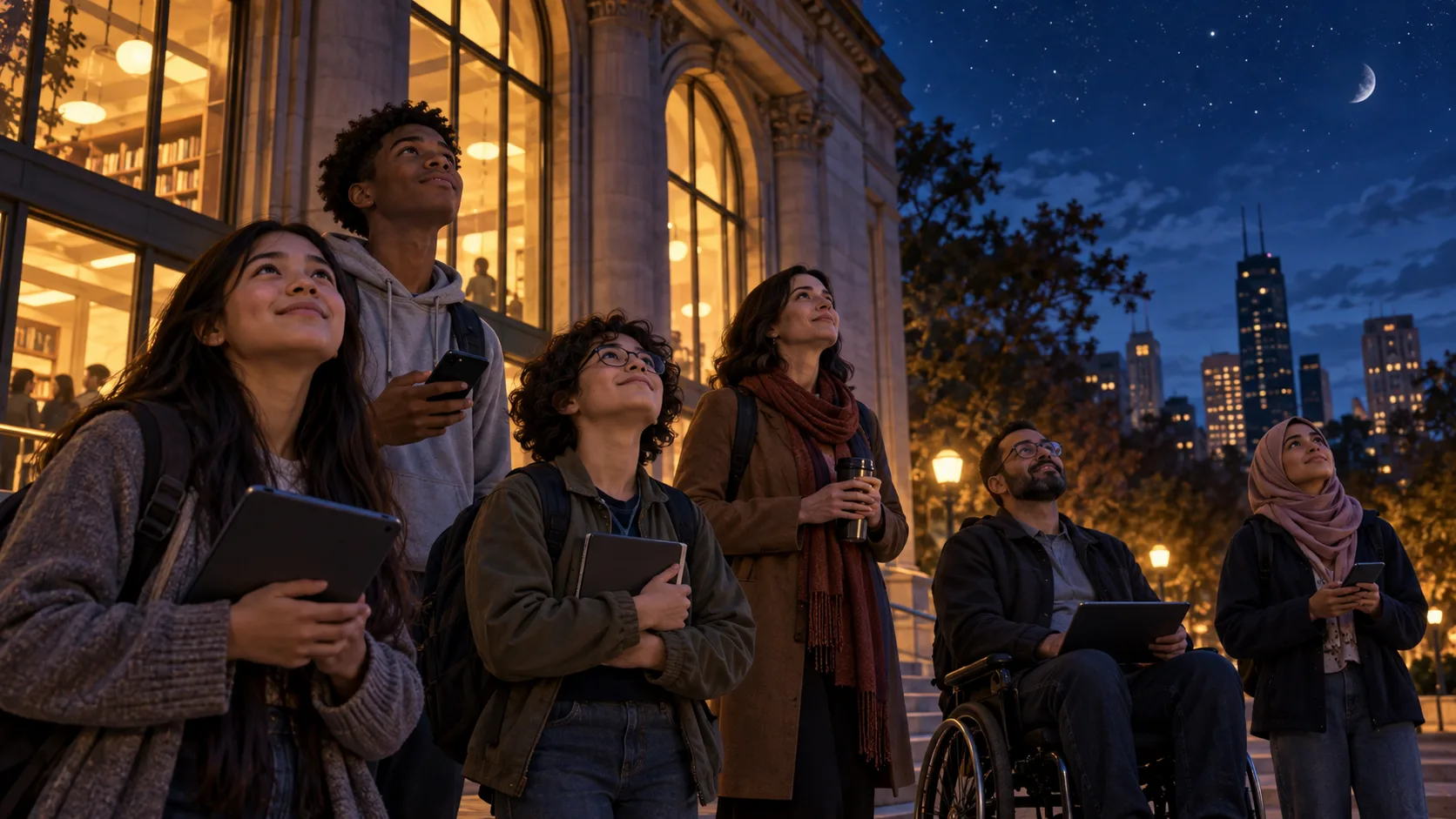
You are here
All that time arrives at this moment. The timeline is still being written.
Where are people connected, and what can this scene not tell us?
Portable computing changed how many people communicate, navigate, and create; the story continues.
Check the evidence: Computer History Museum · Timeline of computersTHIS MOMENT
September 25, 2026There is no final entry. You are part of what comes next.KEEP THE STORY OPEN SUPPORT THE TIMELINE
History belongs
to everyone.
This independent project is a small beginning. Your support will help expand its research, improve the experience, and keep the entire journey free to explore.
One-time and monthly contributions are planned. Secure checkout is not open yet.